New York City has been a major departure point for transatlantic and Caribbean cruises for nearly a century, and it remains one of the few U.S. cruise ports where the destination itself is as much of a draw as the ship. Whether you're arriving a day early to see the sights or tacking on extra time after disembarking, NYC rewards travelers who build in a little pre- or post-cruise exploration.
Cruises marketed as sailing "from New York" actually depart from one of three terminals spread across the harbor: the Manhattan Cruise Terminal on the Hudson River, the smaller Brooklyn Cruise Terminal in Red Hook, and Cape Liberty Cruise Port, which is technically across the water in Bayonne, New Jersey. Wherever your ship docks, the city's landmarks, neighborhoods, and food scene are all within easy reach.
Here's what to see and do in New York City, plus what to know about getting to and from your specific cruise terminal.
Quick Facts
| Cruise terminals | Manhattan Cruise Terminal, Brooklyn Cruise Terminal, Cape Liberty Cruise Port (Bayonne, NJ) |
| Cruise lines sailing from the NY area | Carnival, Celebrity, Cunard, MSC, Norwegian, Oceania, Princess, Regent Seven Seas, Royal Caribbean, Silversea |
| Common itineraries | Bermuda, Caribbean, Canada and New England, transatlantic |
| Getting around the city | Subway, taxi, rideshare, walking |
| Nearest airports | LaGuardia and Newark (~15 miles), JFK (~20 miles) |
Iconic Landmarks
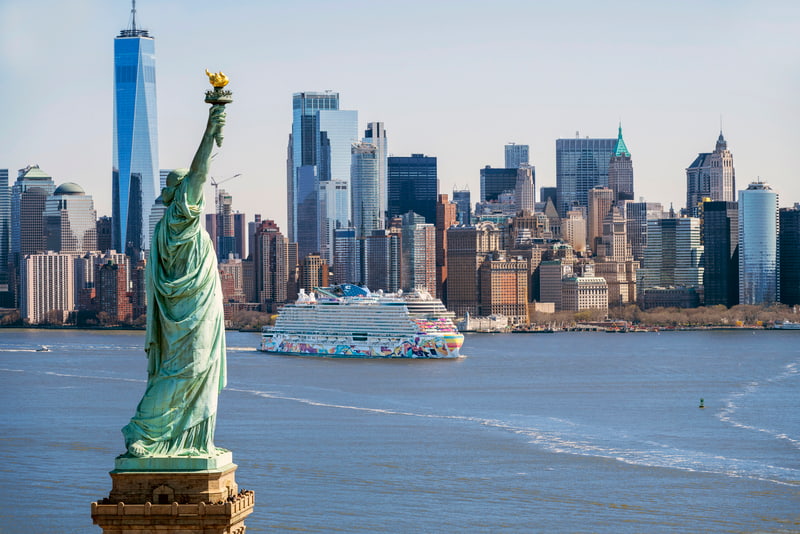
Statue of Liberty and Ellis Island
No first visit to New York feels complete without seeing Lady Liberty up close. Statue City Cruises is the only official ferry operator to Liberty Island and Ellis Island, with departures from Battery Park in Lower Manhattan. Every ticket includes access to the Statue of Liberty Museum and the Ellis Island National Museum of Immigration, so even general admission covers a genuinely full visit.
If you want to go further, pedestal and crown tickets are available but limited and must be booked in advance. Reaching the crown means climbing 162 steps from the pedestal with no elevator access, so it's not for everyone. The National Park Service recommends an early ferry departure if you're hoping to see both islands in a single day, since lines for security screening can run long, especially in summer.
Times Square
Times Square is loud, crowded, and lit up at all hours, and most visitors want to see it at least once regardless. If you're hoping to catch a Broadway show while you're in town, the TKTS booth under the Red Steps at Broadway and 47th Street sells same-day tickets for up to 50% off. Hours vary by day of the week, and lines build quickly, so plan to arrive early if you're set on a specific show. A quieter, indoor alternative is the TKTS location at Lincoln Center, away from the Times Square crowds entirely.
Empire State Building and Top of the Rock
Both observation decks are Midtown staples, and each offers a different experience. The Empire State Building's main deck sits on the 86th floor at 1,050 feet, with a second, smaller deck up on the 102nd floor at 1,250 feet. It's open roughly 8am to 2am, so it's one of the few major attractions you can visit late at night.
Top of the Rock, atop Rockefeller Center, sits lower at 850 feet across three viewing levels and is open roughly 8am to midnight. The tradeoff for the lower elevation is a better photo: since you obviously can't photograph the Empire State Building from inside it, Top of the Rock is the spot for the classic Manhattan skyline shot that actually includes it.
Central Park and the Upper Areas
Central Park
Central Park spans 840 acres in the middle of Manhattan, and while you could easily spend a full day exploring it, a few spots consistently top most visitors' lists. Bethesda Terrace, with its Angel of the Waters Fountain, functions as the park's architectural centerpiece overlooking the lake. Nearby, Bow Bridge, the elegant cast-iron bridge that regularly shows up in movies and photographs, connects to The Ramble, a wilder, wooded section with winding paths that's popular with birdwatchers.
Strawberry Fields, the quiet memorial dedicated to John Lennon and home to the Imagine mosaic, sits near the park's West 72nd Street entrance and makes a peaceful stop if you want a break from the more crowded areas. The park is large enough that trying to see everything in one visit isn't realistic. Picking two or three highlights and walking between them tends to work better than attempting the whole park at once.
The Met and Museum Mile
The Metropolitan Museum of Art anchors Museum Mile, a stretch of Fifth Avenue running along the east side of Central Park from around 82nd Street up toward 105th Street. The Met's permanent collection holds more than 2 million works, spanning 5,000 years of art and history, and it alone can easily fill several hours.
Beyond the Met, Museum Mile includes the Solomon R. Guggenheim Museum, known as much for Frank Lloyd Wright's spiral building as for its modern and contemporary art collection, along with the Jewish Museum, Cooper Hewitt Smithsonian Design Museum, Museum of the City of New York, El Museo del Barrio, and Neue Galerie. If you're visiting in June, check the dates for the Museum Mile Festival, when Fifth Avenue closes to traffic and participating museums offer free admission for the day.
Neighborhoods Worth Exploring
Greenwich Village and SoHo
Greenwich Village centers on Washington Square Park, easily recognized by its marble arch at the foot of Fifth Avenue. From there, Bleecker Street winds through the neighborhood past bars, cafes, and long-running jazz venues like Blue Note and Village Vanguard. The area has a genuine bohemian history, and walking its tree-lined streets gives a different feel from the high-rises of Midtown just a few subway stops away.
SoHo sits just south of the Village and is known for its cast-iron architecture, particularly along Greene, Mercer, and Wooster Streets, where 19th-century industrial buildings now house boutiques and galleries. Broadway through SoHo is the main shopping stretch if that's what you're after, but even without buying anything, it's a neighborhood worth walking simply to look up at the buildings.
DUMBO and the Brooklyn Bridge Walk
Walking across the Brooklyn Bridge is one of the most straightforward ways to see two boroughs in a single afternoon. The bridge is about 1.24 miles long and dates back to 1883, when it became the first bridge connecting Manhattan and Brooklyn. The pedestrian walkway sits above traffic, giving unobstructed views of the skyline, the harbor, and the Statue of Liberty in the distance.
Walking from the Manhattan side, the bridge exits down into DUMBO (short for Down Under the Manhattan Bridge Overpass), a small waterfront neighborhood of cobblestone streets and converted warehouses. Brooklyn Bridge Park runs along the DUMBO waterfront and includes the restored 1922 Jane's Carousel, along with one of the most photographed views of the bridge framed against Lower Manhattan's skyline.
New York City Attractions Recap
| Attraction | Category | Neighborhood | Good to Know |
|---|---|---|---|
| Statue of Liberty & Ellis Island | Landmark | New York Harbor | Book ferry tickets in advance; crown access requires climbing 162 steps with no elevator |
| Times Square | Landmark | Midtown Manhattan | TKTS booth offers same-day Broadway tickets up to 50% off |
| Empire State Building | Landmark | Midtown Manhattan | Open until 2am; main deck sits at 1,050 ft |
| Top of the Rock | Landmark | Midtown Manhattan | Best spot for a skyline photo that includes the Empire State Building |
| Central Park | Park | Manhattan | 840 acres; highlights include Bethesda Terrace, Bow Bridge, and Strawberry Fields |
| The Met | Museum | Upper East Side (Museum Mile) | Permanent collection holds more than 2 million works |
| Museum Mile | Museum district | Fifth Ave, 82nd–105th St | Includes the Guggenheim, Jewish Museum, Cooper Hewitt, and more |
| Greenwich Village | Neighborhood | Lower Manhattan | Centered on Washington Square Park and its marble arch |
| SoHo | Neighborhood | Lower Manhattan | Known for cast-iron architecture and Broadway shopping |
| Brooklyn Bridge | Landmark | Manhattan–Brooklyn | 1.24 miles, opened 1883, first bridge connecting the two boroughs |
| DUMBO | Neighborhood | Brooklyn waterfront | Home to Brooklyn Bridge Park and the 1922 Jane's Carousel |
Where to Eat in New York City

New York's food scene is too large to summarize fully, but a few dishes and neighborhoods come up again and again for good reason.
Pizza
- Joe's Pizza (Greenwich Village): classic no-frills slice shop
- John's of Bleecker Street (Greenwich Village): coal-fired, whole pies only, no slices
- Prince Street Pizza (Nolita): square Sicilian-style slices with pepperoni cups
- Grimaldi's (DUMBO): long-running favorite under the Brooklyn Bridge
Bagels
- Classic order: bagel with cream cheese, lox, capers, and red onion
- Made by boiling the dough before baking, giving it a dense, chewy texture
- Russ & Daughters (Lower East Side): bagels and lox
- Katz's Delicatessen (Lower East Side): famous for pastrami sandwiches
Neighborhoods to Explore for Food
- Chinatown: affordable, varied food from dim sum to hand-pulled noodles
- Lower East Side: old-school Jewish deli tradition alongside newer restaurants and bars
Broadway and Entertainment
Broadway refers specifically to any show playing in one of the city's 41 designated Broadway theatres, each with at least 500 seats. Nearly all of them sit within a few blocks of Times Square, in what's officially called the Theater District, so once you're there, you're within walking distance of most productions running that night.
- TKTS booth (Times Square) already covers same-day discounted tickets, as mentioned earlier
- Off-Broadway theaters have fewer than 500 seats and often lower ticket prices, worth considering for a quieter, more intimate show
- Many individual theaters offer same-day rush or lottery tickets directly through their box office, sometimes significantly cheaper than TKTS
- Arrive at least 30 minutes before curtain as bag checks and ticket scanning take time, and shows without intermissions often don't allow late seating
- Most theaters go dark on Mondays, though there's typically at least one show running somewhere every night of the week
Getting to and from the Cruise Terminal
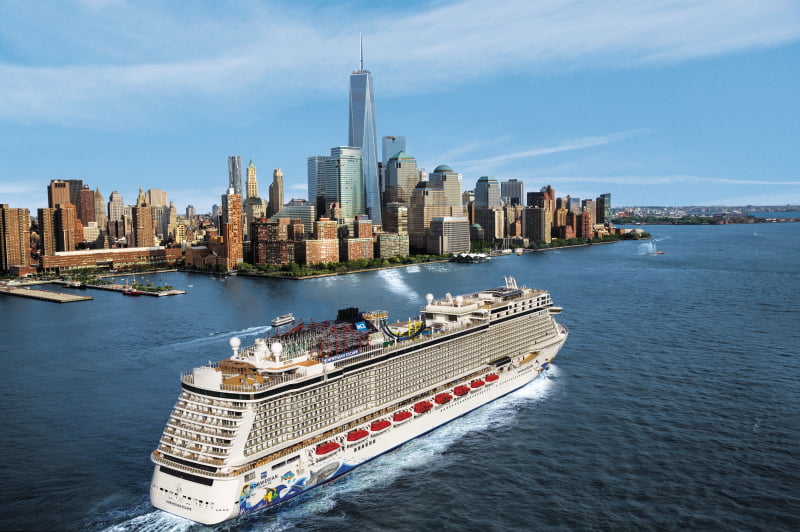
Where you need to go before or after your cruise depends entirely on which of the three terminals your ship uses, so it's worth confirming this before making sightseeing plans.
Manhattan Cruise Terminal
Manhattan Cruise Terminal sits at 711 12th Avenue in Hell's Kitchen, between West 48th and 52nd Streets. It's the most centrally located of the three, with Times Square and Central Park both within walking distance. The closest subway stop is the A/C/E line, about a 5-minute walk from the terminal entrance. On-site parking runs roughly $55-65 per day if you're driving in.
Cape Liberty Cruise Port
Cape Liberty Cruise Port is a separate facility across the harbor in Bayonne, New Jersey, not in Manhattan itself. It has its own parking garage, security entrance, and terminal, so don't head to the Manhattan or Brooklyn terminals by mistake if your ship departs from here. A taxi or rideshare is the most straightforward way to reach it from Manhattan hotels.
Brooklyn Cruise Terminal
Brooklyn Cruise Terminal in Red Hook is the least convenient of the three for public transit. Taxi, rideshare, or the NYC Ferry combined with a short ride are generally the most reliable options for getting there.
- Confirm which specific terminal your cruise line uses before booking transportation or hotels
- Manhattan Cruise Terminal: walkable to Times Square and Central Park
- Cape Liberty: budget extra time for the crossing into New Jersey
- Brooklyn Cruise Terminal: plan taxi or ferry time carefully, subway access is limited
Best Time to Visit New York City Before or After Your Cruise
Since most cruises out of the New York area depart from spring through fall, timing a pre- or post-cruise stay in the city usually comes down to a few clear tradeoffs.
Spring (April through June) and fall (September through November) offer the most comfortable weather for walking the city, with mild temperatures and generally manageable crowds outside of major events. Fall in particular pairs well with cruises departing in September or October, since Central Park's foliage peaks around this time.
Summer (June through August) is peak tourist season. Expect heat, humidity, and the largest crowds at major attractions, though this also lines up with when most Bermuda, Canada and New England, and transatlantic sailings from New York actually run.
Winter splits into two distinct experiences. Late November through December brings holiday lights, ice skating at Rockefeller Center, and a festive atmosphere, but also the highest hotel prices and biggest crowds of the year. January and February are quieter and cheaper, though cold, making them better suited to a trip focused on museums and indoor attractions than long days of walking.
Your New York City Adventure Awaits
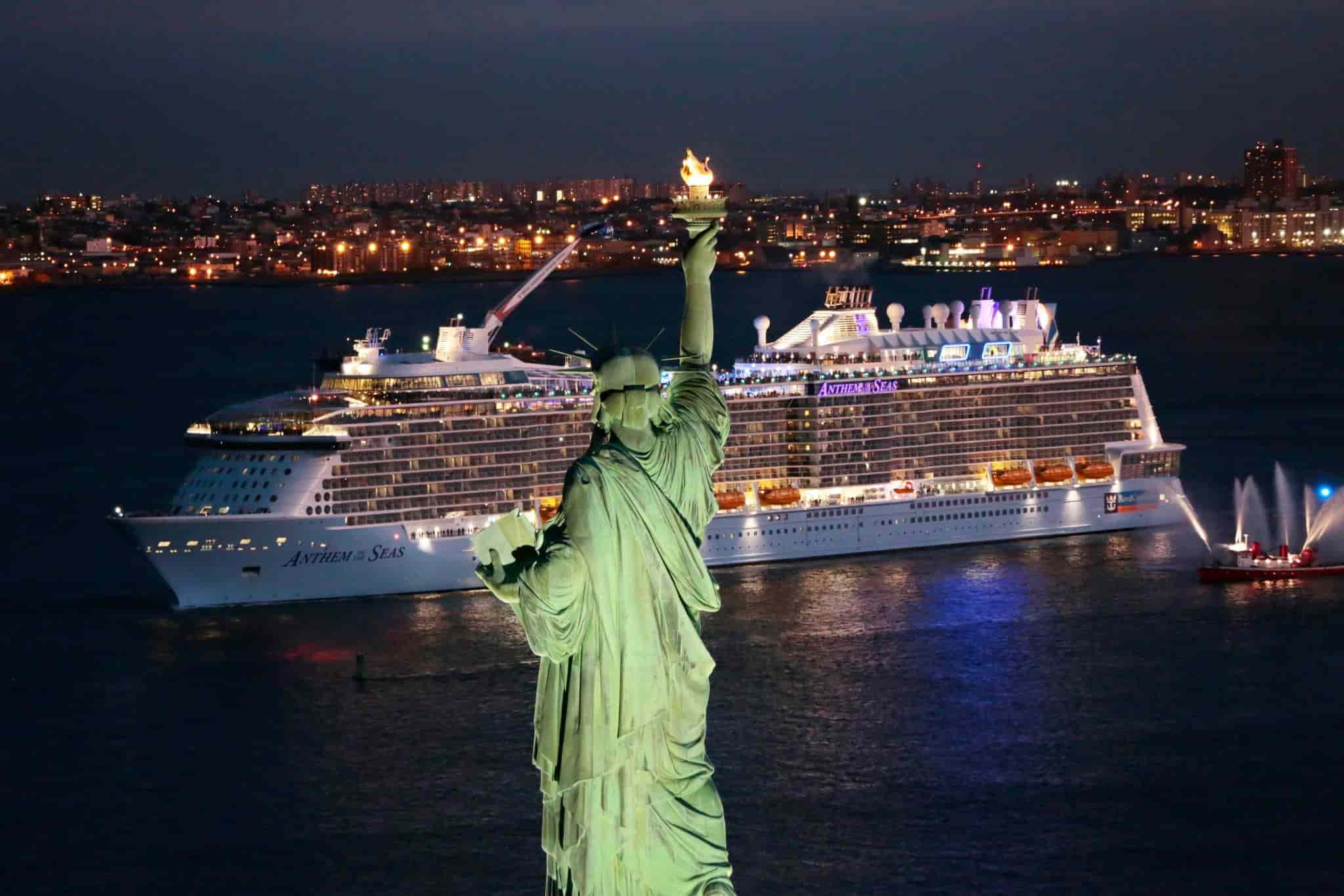
Whether you're arriving a day early to see the Statue of Liberty before boarding, or staying on after your cruise to catch a Broadway show, New York City rewards even a short amount of extra time built into your trip. Between the landmarks, the neighborhoods, the food, and the sheer scale of what's packed into a few square miles, it's a destination that holds up whether you've got one day or five.
Ready to plan your cruise from New York? Browse sailings departing Manhattan, Brooklyn, and Cape Liberty with CruiseDirect and start planning your trip today.

